It has been almost three months since 9.0.0, and eight releases: 9.0.1, 9.0.2, 9.1.0, 9.2.0, 9.2.1, 9.2.2, 9.3.0, and now 9.3.1. Together they added seven new things, closed ten security issues, and fixed close to fifty bugs, which is a very different balance than usual.
This post covers the new things first, and then explains where the rest of the summer went.
Modern Signatures, On by Default
Every message your site sends to the Fediverse carries a signature, the digital equivalent of a wax seal on an envelope. In July 2025 we wrote about the move from the old draft format to RFC 9421, the official standard. Back then, sending with the new format was a setting for early adopters, and we promised to turn it on for everyone once the rest of the Fediverse was ready.
With 9.3.0 it is on by default. Your site now signs outgoing requests with RFC 9421, and falls back to the old format when the server on the other side does not understand it yet. For almost everyone this changes nothing you can see. Your posts keep arriving, your follows keep working.
A small number of servers advertise support for the new format but handle it differently in practice. If your posts suddenly stop arriving on one particular server after this update, you can switch back. Open the ActivityPub settings, click Screen Options in the top right, enable Advanced Settings, and turn off the modern signature format in the Advanced tab. Please let us know in the support forum which server it was, so we can look into it.
Your Podcast Travels With Its Audio
If you publish podcast episodes with Jetpack, your episodes now federate as episodes. The audio file and the cover art travel with the post, so your followers get a playable player in their Fediverse app instead of a link they have to click through.
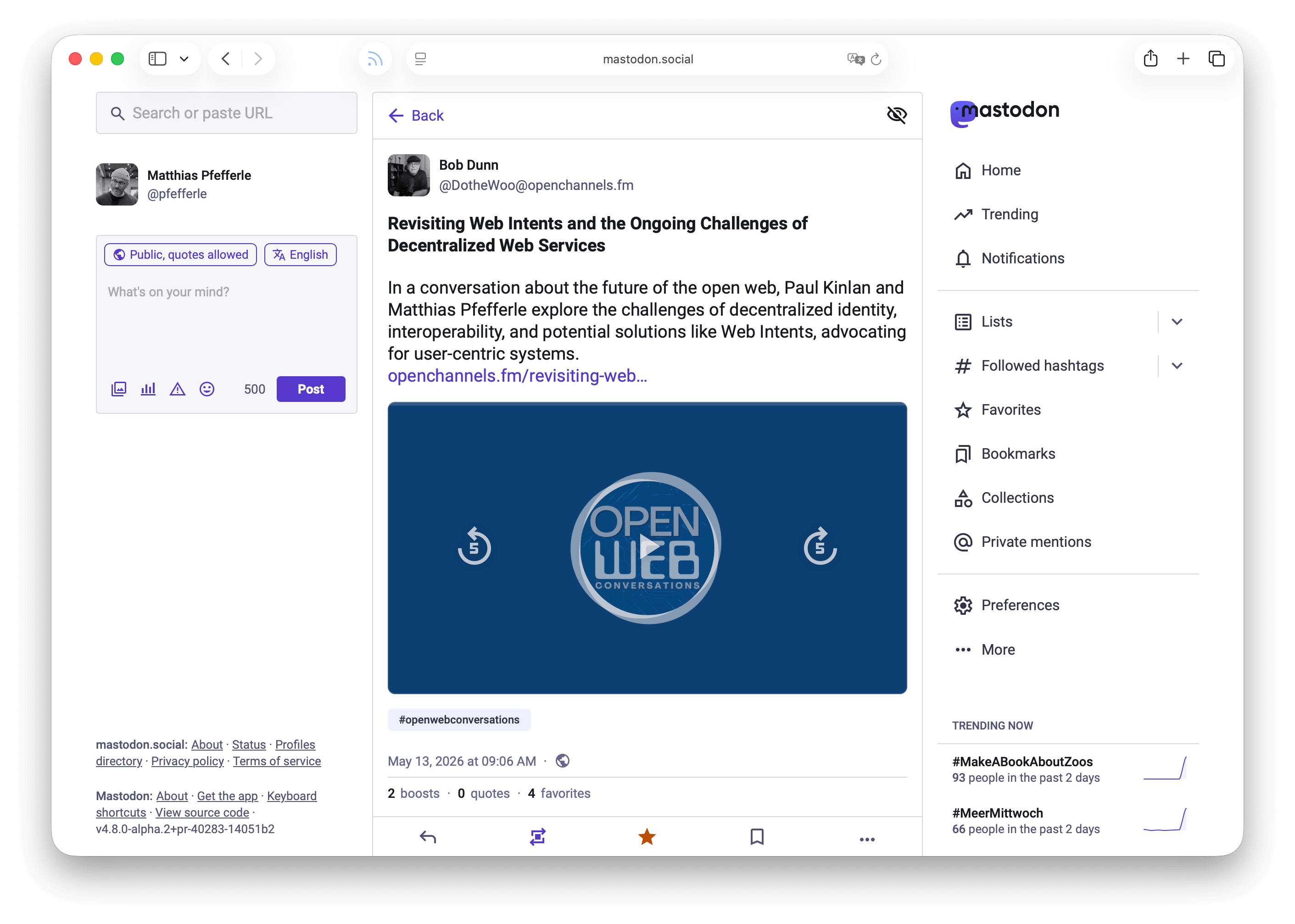
Version 9.1.0 did the same for Podlove Podcast Publisher, where the episode summary now goes out with the post rather than being dropped.
A Quieter Inbox
Likes, reposts, and quotes are lovely until there are two hundred of them and your email inbox has two hundred entries. Until now, switching those off meant switching off notifications for real comments and replies too.
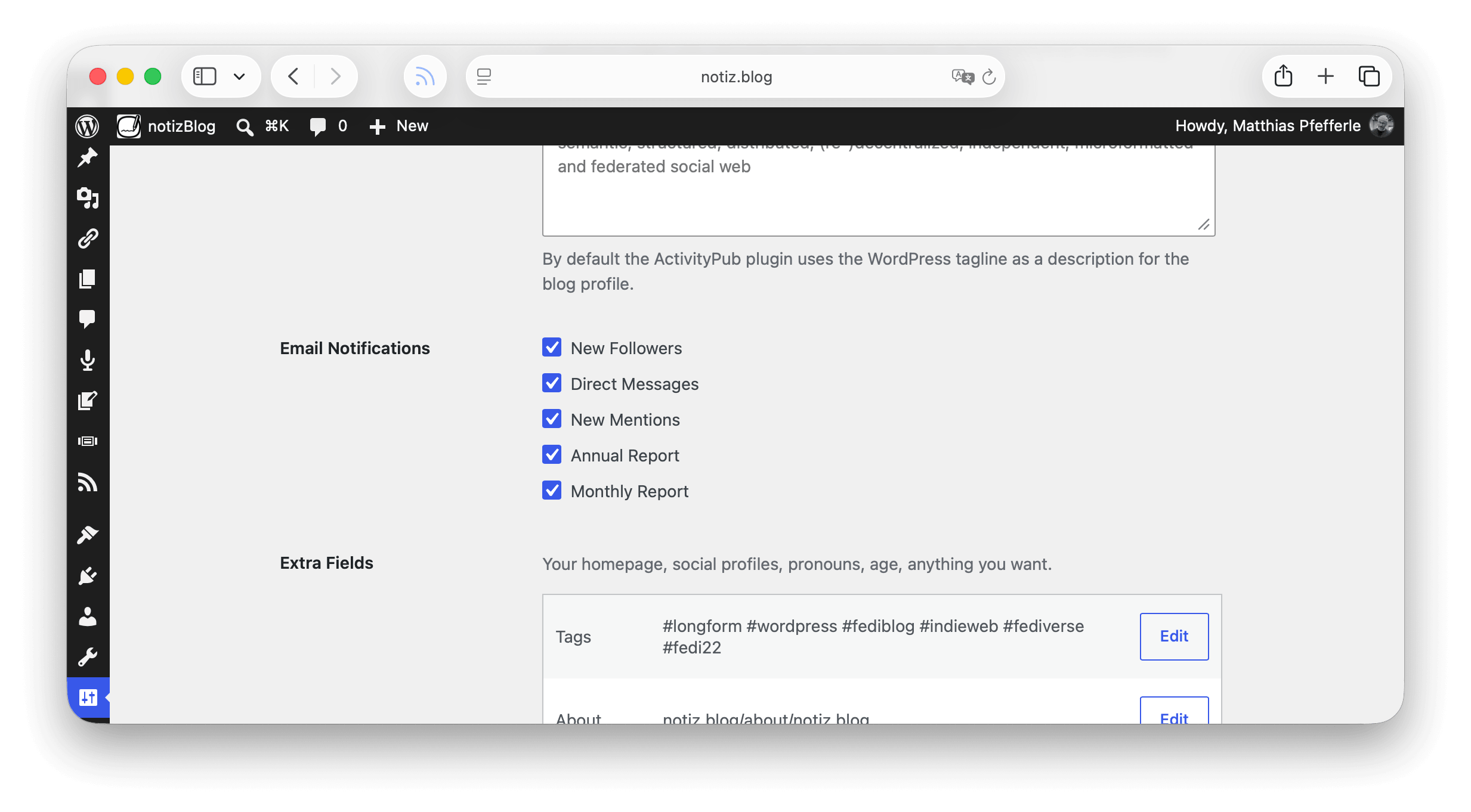
9.3.0 separates them. There is a new notification setting that turns off emails about likes, reposts, and quotes, while comments and replies from the Fediverse keep reaching you. Reactions still show up on your post, you just stop hearing about each one individually.
Smaller Things You Might Notice
- Fediverse and ActivityPub logos in the editor. On WordPress 7.1 and newer, both logos are part of the block editor’s icon library, so you can use them in a Social Icons block or anywhere else an icon fits.
- The follow, reply, and reaction dialogs speak up. Screen readers now announce errors in those dialogs instead of leaving people guessing why nothing happened.
- Scheduled posts show the right preview. Since 9.1.0, a scheduled post shows the Fediverse Preview, so you can see what your followers will get before it goes out.
- Avatars that actually update. The scheduled refresh of remote profiles was not refreshing anything. Commenters kept the avatar and bio they had when they first showed up. Fixed in 9.1.0.
- Two new FAQ guides, added in 9.0.1, for the two questions we get most often: follow requests stuck on “pending”, and comments from the Fediverse not appearing on your posts.
For People Building on the Plugin
9.1.0 added an actor autocomplete endpoint, so a Fediverse app connected to your site can offer typeahead search when you are mentioning someone. There is also a new filter for sites that need to federate inside a private or internal network, which mostly matters for intranets and staging setups.
In 9.3.0, apps connected through the ActivityPub API now use the standard permission names from the specification, and fetching remote content through your site counts as reading rather than posting. Apps also see the real error when a post is missing, instead of a generic failure that told them nothing.
Where the Summer Went
Seven new things in three months is not much. Here is the reason.
Since June we have had a steady stream of security reports. Ten of them became entries in the changelogs of 9.1.0 and 9.3.0, and a few more landed quietly as fixes. Every report has to be read, reproduced, judged, fixed, tested, and shipped, and the fix has to be written so it does not break the sites that already work. For a team our size that is most of a week each time, sometimes more.
This is not a complaint, and a real thank you to everyone who sent a report and then waited while we worked through the queue. Nearly all of the reports were real, and every one of them made the plugin safer for the people running it. This is responsible disclosure working the way it should. It just means the roadmap moves slower than it looks on paper, and features that were planned for July are still open.
We are not alone in this. WordPress core is seeing the same wave, and for the same reason: AI models have become good enough at reading code that finding a plausible vulnerability is now cheap. The security team wrote about it in The Core Security Initiative, and the project started Protect The Shire to review the code in the plugin and theme directories at a scale that was not possible before. The same tools that raise the number of reports also help everyone work through them. On balance, we think this is good for the ecosystem, even on the weeks where it does not feel like it.
In general terms, the security work in these releases covers four areas:
- Content from other servers is cleaned before it is stored, and again before it is displayed, so what another server sends cannot influence how your site behaves.
- Data that belongs to you stays yours. Your followers, the profiles your site has cached, and your reader posts are not readable by logged-out visitors, and the setting that hides your follower list is respected everywhere.
- Activities are checked more strictly against the account they claim to come from, so a server cannot act on behalf of someone else.
- Apps you connect can only do what you allowed them to do, and nothing wider.
We are keeping this vague on purpose. The details are in the reports, and we would rather not hand a recipe to anyone whose site has not updated yet. If you run the plugin, please update.
What the Fixes Cover
The fifty or so fixes across these releases are not one story, but they fall into a few groups:
- Finding each other. Profiles and posts were not always found when an address contained unusual characters, or was written with different capitalisation, or when the other server answered in an unexpected shape. Several fixes make lookups work in all of those cases.
- Reactions arriving once. Likes and boosts could be recorded as duplicate comments, or come back after you marked them as spam. A deletion on Mastodon did not always remove the matching comment on your site. Both are fixed.
- Caching. ActivityPub responses were sometimes stored by page caches meant for regular web pages. Since 9.2.0, those responses are served only to clients that ask for ActivityPub data and nothing else, which keeps them out of caches like LiteSpeed and Surge. Support for the WP REST Cache plugin was removed as part of this.
- Publishing edge cases. Posts scheduled for a future date were removed from the Fediverse when edited. Hidden page elements, like the text inside a closed dialog, ended up in the content sent to your followers. Backslashes vanished from imported titles. Small things, annoying every time.
- Living with other plugins. Fixes for sites running Polylang, Jetpack, Surge, and the Mastodon importer, which was creating duplicate posts when an archive was imported twice.
- Admin screens and the editor. Styles that failed to load on the Fediverse screens and in the Followers and Following blocks, an editor warning about unsaved changes that appeared right after saving, and a handful of errors that filled up log files without breaking anything visible.
The full, item-by-item changelog for every release is in the plugin’s changelog if you want to read it in detail.
Get It
Download from WordPress.org or grab it on GitHub. If your site updates automatically, you already have it.
Thanks to everyone who filed a bug report with steps we could follow. Those are the ones that get fixed fastest.
Now that signatures are modern by default: does anything still deliver differently for you? And what would you like to see us build once the queue is shorter?


Leave a Reply